Yokohama, Kanagawa: Complete Family Living Guide for Foreign Residents
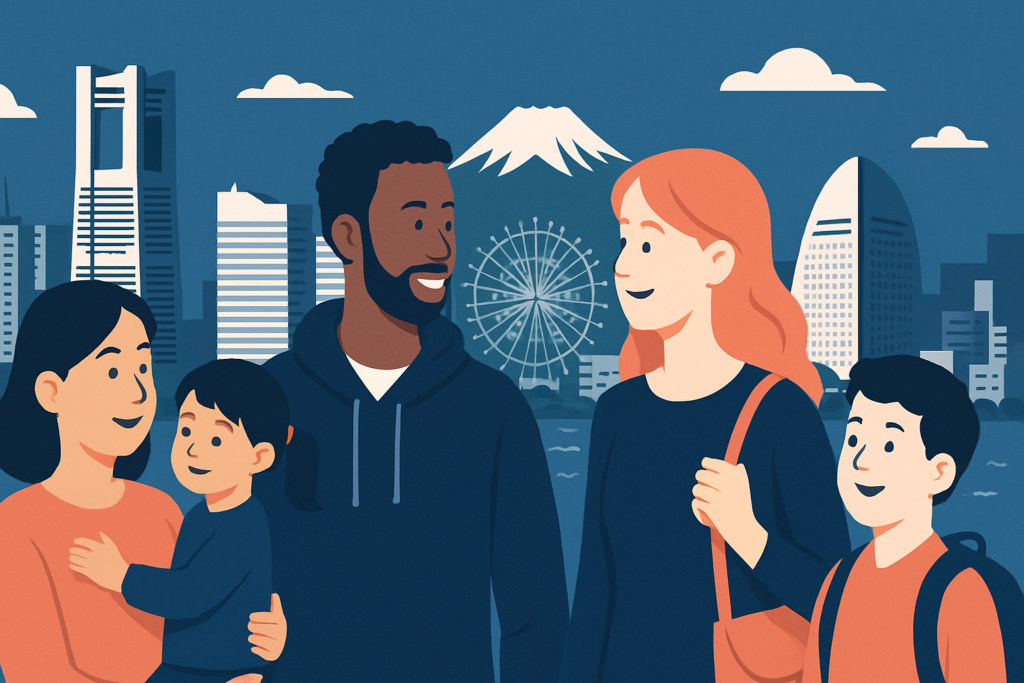
Original edition: historical reference (see the 2026 update above)
Introduction to Yokohama: Japan’s International Port City
Yokohama, the capital of Kanagawa Prefecture, is Japan’s second-largest city by population and a premier choice for international families seeking a balanced lifestyle near Tokyo. With its rich history as Japan’s gateway to the world, extensive multilingual support infrastructure, international schools, and family-friendly neighborhoods, Yokohama offers an attractive alternative to Tokyo living with easier access to nature, coastal areas, and a more spacious urban environment.
This comprehensive guide provides verified information from official sources to help families make informed decisions about relocating to Yokohama.
Foreign Resident Population (Official Statistics)
According to the City of Yokohama’s official statistics, as of January 1, 2024, Yokohama had a total population of approximately 3,773,214 residents, with 102,227 registered foreign residents, representing approximately 2.7% of the total population.
The largest foreign national communities include:
- Chinese nationals: approximately 45,000
- Korean nationals: approximately 14,000
- Vietnamese nationals: approximately 8,000
- Filipino nationals: approximately 7,000
- Nepalese nationals: approximately 4,000
Source: Yokohama City Official Statistics (横浜市統計ポータルサイト), referenced January 2024
Key Residential Areas for Families
Aoba Ward (青葉区)
Known as Yokohama’s most family-oriented ward, Aoba features spacious residential areas, excellent schools, parks, and green spaces. The Tama-Plaza and Azamino stations offer convenient access to both Yokohama and Shibuya.
Kohoku Ward (港北区)
Home to Shin-Yokohama Station (Shinkansen access), this area balances business convenience with family amenities, including shopping centers and international schools.
Naka Ward (中区)
The central business district includes the historic Kannai area, Chinatown, and Motomachi shopping district. Closer to international facilities but more urban and compact.
Tsuzuki Ward (都筑区)
A planned residential area developed in the 1990s with modern infrastructure, parks, and family facilities centered around Center-Kita and Center-Minami stations.
RENTAL LISTING SNAPSHOT
Real rental examples around Yokohama
These listings were found on SUUMO and checked on October 20, 2026. Availability changes quickly. For foreign-resident acceptance, guarantor requirements, documents, initial costs or detailed conditions, ask Japan Live before applying.
築36年
JR根岸線/根岸駅 歩10分
神奈川県横浜市磯子区原町Get move-in tips →
Source listing on SUUMO ↗
築99年以上
ブルーライン/阪東橋駅 歩16分
神奈川県横浜市南区山谷Get move-in tips →
Source listing on SUUMO ↗
築59年
相鉄本線/鶴ケ峰駅 バス12分 (バス停)川井宿 歩8分
神奈川県横浜市旭区川井宿町Get move-in tips →
Source listing on SUUMO ↗
Browse all current Yokohama rentals on SUUMO ↗
Checked October 20, 2026. Listings are examples, not recommendations. Japan Live is not the listing agent and does not guarantee availability or approval.
Rental Housing Estimates
Important Notice: The following are indicative estimates only based on general market observations as of late 2024/early 2025. Actual rental prices vary significantly based on property age, exact location, station proximity, building specifications, and market conditions. Always verify current rates with real estate agents and landlords.
Estimated Monthly Rent Ranges:
- 1LDK (50-60㎡): ¥90,000-¥150,000 (suburban areas) to ¥120,000-¥200,000 (central areas)
- 2LDK (60-75㎡): ¥110,000-¥180,000 (suburban areas) to ¥150,000-¥250,000 (central areas)
- 3LDK (75-90㎡): ¥130,000-¥220,000 (suburban areas) to ¥180,000-¥350,000 (central/premium areas)
- 4LDK+ (90㎡+): ¥170,000-¥280,000 (suburban areas) to ¥250,000-¥500,000+ (central/premium areas)
Initial costs typically include:
- Deposit (敷金): 1-2 months’ rent
- Key money (礼金): 1-2 months’ rent
- Agent fee: 1 month’s rent + tax
- First month’s rent in advance
- Fire insurance: ¥15,000-¥20,000/year
Commuting from Yokohama
To Central Tokyo:
- Yokohama Station to Tokyo Station: Approximately 25-30 minutes via JR Tokaido Line
- Yokohama Station to Shibuya: Approximately 27 minutes via Tokyu Toyoko Line (limited express)
- Yokohama Station to Shinagawa: Approximately 18 minutes via JR lines
- Shin-Yokohama to Tokyo: Approximately 18 minutes via Shinkansen (non-reserved)
Major Railway Lines:
- JR Tokaido, Yokosuka, Keihin-Tohoku, Negishi, Yokohama Lines
- Tokyu Toyoko Line (direct service to Shibuya)
- Sotetsu Line
- Minatomirai Line
- Yokohama Municipal Subway (Blue and Green Lines)
Shopping and Commercial Facilities
Major Shopping Centers:
- Yokohama Takashimaya: Department store at Yokohama Station with extensive family goods, children’s floors, and restaurants
- MARK IS Minatomirai: Large shopping mall with international brands, cinemas, and family entertainment
- Colette-Mare: Directly connected to Sakuragicho Station with diverse shops and dining
- Aeon Style Yokohama: Family-oriented shopping center with groceries and daily necessities
- IKEA Port Yokohama: Full-range IKEA store with Swedish food market
- Costco Wholesale Tsuzuki: Membership warehouse in Tsuzuki Ward
- Tama-Plaza Terrace: Station-connected shopping complex in Aoba Ward
International Grocery Stores:
- Kaldi Coffee Farm: Multiple locations; imported foods and coffee
- Seijo Ishii: Premium imported and domestic products
- Yamaya: Imported wines, spirits, and international foods
Note: Store locations and operating status may change. Verify before visiting.
Medical Facilities and Healthcare
Major Hospitals with English Support:
- Yokohama City University Hospital (横浜市立大学附属病院)
Address: 3-9 Fukuura, Kanazawa-ku
Services: Comprehensive medical center with emergency services, many specialties; some English-speaking staff available
Website: https://www.yokohama-cu.ac.jp/fukuhp/ - Saiseikai Yokohamashi Tobu Hospital (済生会横浜市東部病院)
Address: 3-6-1 Shimosueyoshi, Tsurumi-ku
Services: Emergency hospital with multiple departments; emergency 24-hour care
Website: https://www.tobu.saiseikai.or.jp/ - International Goodwill Hospital (国際親善総合病院)
Address: 1-28-1 Tomita-cho, Izumi-ku
Note: Some English-speaking medical staff available
Website: http://www.shinzen.jp/
Medical Interpretation Services:
The Yokohama City Medical Interpretation System (横浜市医療通訳派遣システム) provides interpreter dispatch services to registered medical facilities in multiple languages including English, Chinese, Korean, Spanish, Portuguese, and others. Contact the Yokohama Association for International Communications and Exchanges (YOKE) for details.
For medical emergencies with language support, the Yokohama City Fire Bureau provides multilingual emergency call support.
Municipal Services and Multilingual Support
Yokohama City International Office
The city operates comprehensive multilingual support services through several channels:
- Yokohama Association for International Communications and Exchanges (YOKE – 横浜市国際交流協会)
Address: Pacifico Yokohama, 1-1-1 Minato Mirai, Nishi-ku
Services: Free consultation, information provision, interpreter dispatch, community events
Languages: English, Chinese, Korean, Spanish, Portuguese, and others
Website: https://www.yokeweb.com/ - International Consultation Service: Free multilingual consultation available by phone and in-person on daily life, visa issues, housing, medical, education, and other concerns
- Multilingual Information Website: The City of Yokohama provides official information in English, Chinese (Simplified/Traditional), Korean, Spanish, Portuguese, and other languages at https://www.city.yokohama.lg.jp/
Resident Registration and Visa Procedures
Foreign residents must complete the following at their local ward office (区役所) within 14 days of moving to Yokohama:
- Submit notification of moving-in (転入届)
- Update residence card address at Immigration Services Agency branch or ward office
- Enroll in National Health Insurance (if applicable)
- Register for National Pension (if applicable)
Each of Yokohama’s 18 ward offices handles these procedures. Many have English-speaking staff or can arrange interpretation support.
Waste Disposal and Recycling
Yokohama has strict waste separation rules with multilingual guides available. The city provides detailed disposal calendars and information in multiple languages through the official website and the “MiKURU” waste separation app available in English and other languages.
Education and International Schools
International Schools:
- Yokohama International School (YIS)
Location: Aoba Ward
Curriculum: International Baccalaureate (IB)
Grades: Pre-K through Grade 12
Website: https://www.yis.ac.jp/ - St. Maur International School
Location: Naka Ward (main campus), satellite campuses in other areas
Curriculum: International Baccalaureate (IB)
Grades: Pre-K through Grade 12
Website: https://www.stmaur.ac.jp/ - Canadian Academy (Kobe-based but accessible from Yokohama)
Note: Some families in Yokohama commute to international schools in neighboring Tokyo
Public Schools with International Support:
Yokohama City Board of Education provides Japanese language support programs (Japanese Language Class – 日本語教室) at designated public elementary and junior high schools for foreign children. Contact the Board of Education or YOKE for school placement assistance.
Family Amenities and Recreation
Parks and Outdoor Spaces:
- Yamashita Park: Waterfront park with open spaces, harbor views, and playground facilities
- Nogeyama Zoo: Free admission zoo in Nishi Ward, popular with young children
- Sankeien Garden: Traditional Japanese garden with historic buildings and seasonal beauty
- Kodomo-no-Kuni (Children’s Land): Massive outdoor playground and recreation area in Aoba Ward
- Yokohama Zoological Gardens “Zoorasia”: Modern zoo with naturalistic habitats
Museums and Cultural Facilities:
- Cup Noodles Museum: Interactive museum about instant ramen history
- Yokohama Anpanman Children’s Museum: Character-themed museum for young children
- Mitsubishi Minatomirai Industrial Museum: Hands-on science and technology exhibits
- Yokohama Port Museum and Nippon Maru: Maritime history and ship museum
Pros and Cons of Family Living in Yokohama
Advantages:
- Excellent international infrastructure: Well-established multilingual support, international schools, and expat community
- Proximity to Tokyo: Easy access to capital while maintaining more space and lower density
- Coastal environment: Waterfront areas, harbor views, and seaside recreation opportunities
- Family-friendly neighborhoods: Especially in Aoba, Kohoku, and Tsuzuki wards with parks and good schools
- Comprehensive municipal services: Strong city government support for foreign residents
- International atmosphere: Long history as a port city creates welcoming environment
- Shopping and dining diversity: Extensive commercial facilities and international restaurants
- Good transportation: Multiple railway lines and highway access
Challenges:
- Higher cost than regional cities: Rent and living costs are lower than central Tokyo but higher than most Japanese cities
- Commute time: Daily commuting to central Tokyo adds 30-60+ minutes each way depending on location
- Earthquake and tsunami risk: Coastal location requires awareness of natural disaster preparedness
- Humid summers: Being near the coast can increase humidity during summer months
- Limited housing size: Even family apartments may be smaller than Western standards
- International school costs: Private international education is expensive (annual tuition often ¥2-3 million+)
- Some areas less convenient: Suburban family-friendly areas may have longer commutes to stations
Moving to Yokohama: Essential Checklist
Before Arrival:
- Secure valid visa status appropriate for residence in Japan
- Research and contact potential schools for children
- Arrange temporary accommodation for initial period
- Prepare necessary documents (passport, visa, certificates of employment, family register documents if applicable)
- Consider shipping arrangements for household goods
Within First Week:
- Complete resident registration at local ward office within 14 days
- Update residence card address
- Open Japanese bank account (bring residence card, seal/hanko, passport)
- Obtain Japanese phone number (mobile service)
- Enroll in National Health Insurance if not covered by employer
Within First Month:
- Set up utilities (electricity, gas, water) – landlord or real estate agent can assist
- Register for National Pension if required
- Find regular doctors/clinics near your residence
- Register children at schools
- Learn local waste disposal rules and obtain disposal calendar
- Register with YOKE for ongoing support and community connection
- Apply for My Number Card (マイナンバーカード) for convenient administrative procedures
- Obtain commuter pass if applicable (定期券)
Ongoing:
- Join local community groups or international parent groups
- Learn basic Japanese for daily situations
- Establish relationships with neighbors (traditional brief greetings when moving in)
- Keep visa and residence documentation current
- Register for disaster preparedness notifications and apps
Google Map Location
The following map shows Yokohama Station, the city’s main transportation hub:
View Yokohama Station on Google Maps
Frequently Asked Questions
Q: Do I need to speak Japanese to live in Yokohama?
A: While basic Japanese is helpful for daily life, Yokohama has extensive multilingual support services. The city provides interpretation services, multilingual staff at ward offices, English-speaking medical facilities, and international schools. Many expatriates live comfortably with limited Japanese, though learning the language significantly enhances the experience and integration.
Q: How does Yokohama compare to Tokyo for families?
A: Yokohama generally offers more spacious housing at lower costs than central Tokyo, with excellent access to Tokyo via multiple train lines (25-40 minutes to major stations). The city has a more relaxed atmosphere with waterfront areas and parks while maintaining strong international infrastructure, schools, and services comparable to Tokyo.
Q: What health insurance options are available?
A: If employed, you’ll typically be covered by Employee Health Insurance (社会保険). Self-employed individuals and those not covered by employer insurance must enroll in National Health Insurance (国民健康保険) at their ward office. Both systems cover approximately 70% of medical costs, with the patient paying 30% at the point of service.
Q: Are there English-speaking childcare facilities?
A: Yes, Yokohama has several international preschools and daycare centers, though availability can be competitive. The city also operates public daycare (認可保育園) which primarily operates in Japanese but may have some foreign children. Contact YOKE or the city’s Child and Youth Bureau for current listings.
Q: How safe is Yokohama for families?
A: Yokohama is very safe by international standards, with low crime rates typical of Japanese cities. The main safety concerns are natural disasters (earthquakes, typhoons). The city has comprehensive disaster preparedness systems, multilingual emergency information, and designated evacuation centers. Families should familiarize themselves with local disaster procedures.
Q: Can I find housing that accepts pets and foreigners?
A: While some landlords have restrictions on foreign tenants or pets, Yokohama’s size and international character mean many properties are available. Working with real estate agents experienced in foreign client placement (many advertise English services) significantly helps. Expect to provide additional documentation and possibly guarantor arrangements.
Q: What is the process for enrolling children in public schools?
A: Contact your local ward office’s education section with your residence registration. Public elementary and junior high schools are assigned based on residence area. Schools provide Japanese language support programs for foreign children. The Yokohama City Board of Education and YOKE can provide guidance in English.
Q: Are there community groups for international families?
A: Yes, several organizations serve international families including YOKE community programs, international school parent associations, religious organizations with international congregations, and informal groups organized through social media. These provide valuable networking, support, and social opportunities.
Related Resources
- Complete Guide to Living in Japan
- Tokyo Family Living Guide
- Understanding Japan’s Healthcare System
- Japanese School System Explained
- Japan Visa and Immigration Guide
Conclusion
Yokohama presents an excellent option for international families seeking a balanced lifestyle in the Greater Tokyo area. The city’s well-established international infrastructure, comprehensive multilingual services, quality educational options, and family-friendly neighborhoods make it particularly suitable for families relocating to Japan. While housing costs are significant and commuting to Tokyo requires time investment, the benefits of space, coastal environment, international community, and strong municipal support create an attractive living environment.
Thorough preparation, utilizing the city’s extensive support services, and connecting with the established international community will help ensure a smooth transition to life in Yokohama.
Need Personalized Relocation Assistance?
Moving to Yokohama requires careful planning and local expertise. Japan Live offers professional relocation support services to help your family transition smoothly.
Get Your Free Relocation Assessment →
Schedule a Consultation with Our Experts →
Our team can assist with housing search, school placement, municipal registration, and settling-in support tailored to your family’s needs.
Disclaimer: This guide provides general information based on official sources and publicly available information current as of January 2025. Rental estimates, commercial facility information, and business details may change. Always verify current information with official sources, service providers, and licensed professionals before making decisions. Japan Live is not responsible for changes to information or decisions made based on this guide.
Last checked and verified: January 2025
Where should you live?
Compare neighborhoods using your destination, realistic rent ceiling, commute limit, household and lifestyle priorities. Results are ranked with an explainable score instead of a fixed shortlist.
Travel times and rent bands are planning estimates, not live listings. Always verify the exact route, property and move-in conditions.
We can help you understand what to check before moving: rental documents, move-in costs, utilities, local services and everyday living rules. Tell us what you need help with.
Get practical Japan living tips →